
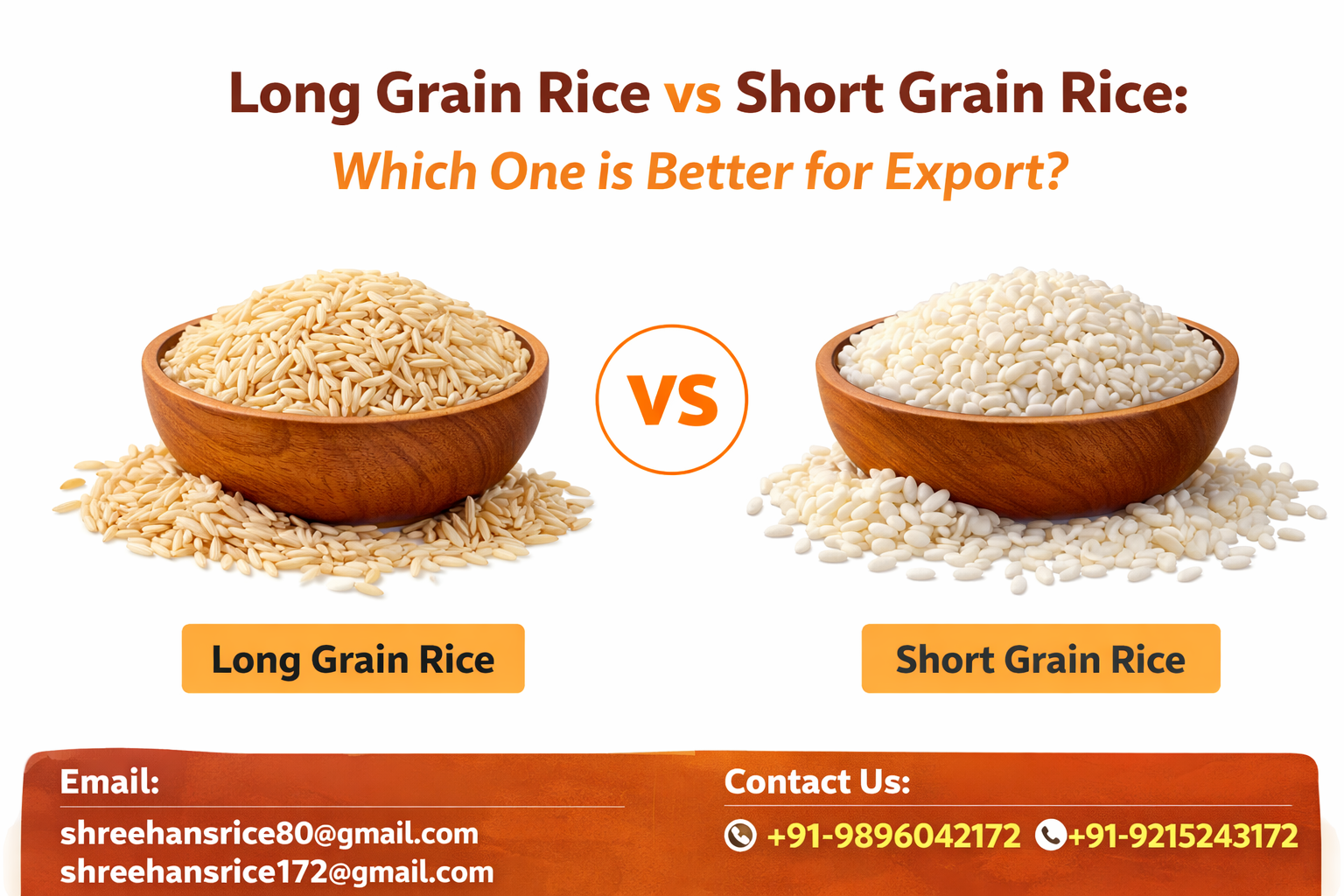
Rice is one of those staple foods that you will always find in almost every kitchen around the world. Be it a small kitchen in India or a restaurant in the Middle East, rice is always a key ingredient in the preparation of almost every meal. Moreover, more than half of the global population relies on rice as their staple food.
However, when it comes to the export of rice, the story is a little more complex than it seems. People in other countries have specific requirements for exporting rice. Some want rice with fluffy and separate grains, while others want soft and sticky rice.
This is where the difference between long-grain rice and short-grain rice comes into the picture.
With the growing global trade and business, rice exporters must choose the best type of rice based on market demand and profitability. Long-grain rice, especially Basmati rice, is the most widely exported rice in the world, particularly to the Middle East and European countries.
So, which one is better when it comes to the export of rice? Let’s dive deeper into the subject.
What is Long-Grain Rice?
Long-grain rice is a type of rice in which the rice grains are long and slender in shape. When cooked, the rice grains remain separate and do not stick together.
This is the main reason long-grain rice is preferred for preparing biryani, pulao, and other fried rice dishes.
- Key Characteristics: Long and thin rice grains, not sticky and light and fluffy
- Popular Varieties: Basmati and jasmine rice. 1121 Basmati rice is the most exported rice from India.
- Major Export Markets: Saudi Arabia, UAE, Iran and Europe
These markets require rice of premium quality, with good cooking properties, to suit different cuisines.
What is Short-Grain Rice?
Short-grain rice is different in terms of its texture and appearance compared to other types of rice. Its grains are short, round, soft, and sticky. They are best used in preparations that require rice to hold its shape.
Key Characteristics:
- Grain Size: Short and round in shape
- Texture: Sticky, soft, and chewy after cooking
Common Uses
The most common uses are for sushi, rice desserts, sticky rice preparations, etc.
High Demand Regions: Japan, South Korea, China, etc. In these regions, sticky rice is an integral part of their everyday culture.
Key Differences Between Long-Grain Rice and Short-Grain Rice
Here is a simple table to understand the differences between these two types of rice in a better way.
Feature | Long-Grain Rice | Short-Grain Rice |
Grain Shape | Long and slender | Short and round |
Texture After Cooking | Fluffy and separate | Sticky and soft |
Starch Content | Lower starch | Higher starch |
Shelf Life | Longer | Slightly shorter |
Storage and Shipping | Easier and stable | Needs careful handling |
Market Demand | High globally | Limited and niche |
Global Market Demand and Export Trends
If we analyse the current scenario of rice exports around the globe, we can see that long-grain rice is leading the market.
India, Thailand, Vietnam, etc., are major rice-exporting countries, especially for long-grain rice. India is a major player in the export of Basmati rice varieties.
Demand Distribution
- The Middle East has a high demand for basmati rice.
- Europe is experiencing an increasing demand for premium rice varieties.
- Africa has a mixed and low demand for long-grain rice
Short-grain rice has a smaller and more targeted market, mainly in East Asia.
Why Long-Grain Rice Dominates
The main reasons long-grain rice dominates are its wider global acceptance, suitability for multiple cuisines, and better shelf life and transport stability. Short-grain rice still maintains strong demand in targeted industries, such as sushi.
Which Rice Is Better for Export?
From a purely practical point of view, long-grain rice is the better choice.
Export considerations
- Demand: Long-grain rice has strong global demand.
- Logistics: It is more stable in transport than the short-grain
- Shelf Life: Long-grain rice has a longer shelf life.
- Pricing: This rice offers a more profitable outcome.
Short-grain rice is more targeted in its use and has a smaller market.
Why Exporters Prefer Long-Grain Rice
Long-grain rice is the preferred choice because it offers several consistent advantages. It has a higher demand in the global market. It is suitable for transport and can be used in a large number of cuisines. Plus, the rice offers more profits than the short grains.
If you’re looking to break into the export market, a good Long Grain Rice Exporter could make a big difference.
Looking for a trusted Long Grain Rice Exporter? Shreehan Basmati is here to help. The company offers premium quality rice for global markets.
When Short Grain Rice Makes Sense for Export
Short-grain rice is useful when you’re targeting a niche market. It is suitable when targeting Japan or Korea, applying to sushi restaurants or food brands, or working in speciality food industries. In all these cases, quality is more important than quantity.
Conclusion
Long-grain rice and short-grain rice are both important in their own way for global trade. But for large-scale global trade, long-grain rice is superior. It offers wider markets, better logistics, and higher profitability. Short-grain rice is important, but only in a limited number of markets. For exporters seeking a guaranteed experience and global acceptance, long-grain rice is a better choice.
Shreehans Basmati is a trusted name with a reputation for quality and expertise in rice exports.
Frequently Asked Questions
Long-grain rice is better for export than short-grain rice.
Long-grain rice is better for export, as it is widely demanded, has a long shelf life, and can be used for a variety of dishes.
Yes, short-grain rice is also exported, but only to a limited number of markets, including Japan, Korea, and the food industries.
The main difference between long-grain rice and short-grain rice is their texture. The former is fluffy, whereas the latter is sticky.
Shreehans Basmati is a trusted name in long-grain rice exports. The company has expertise in the rice industry.