
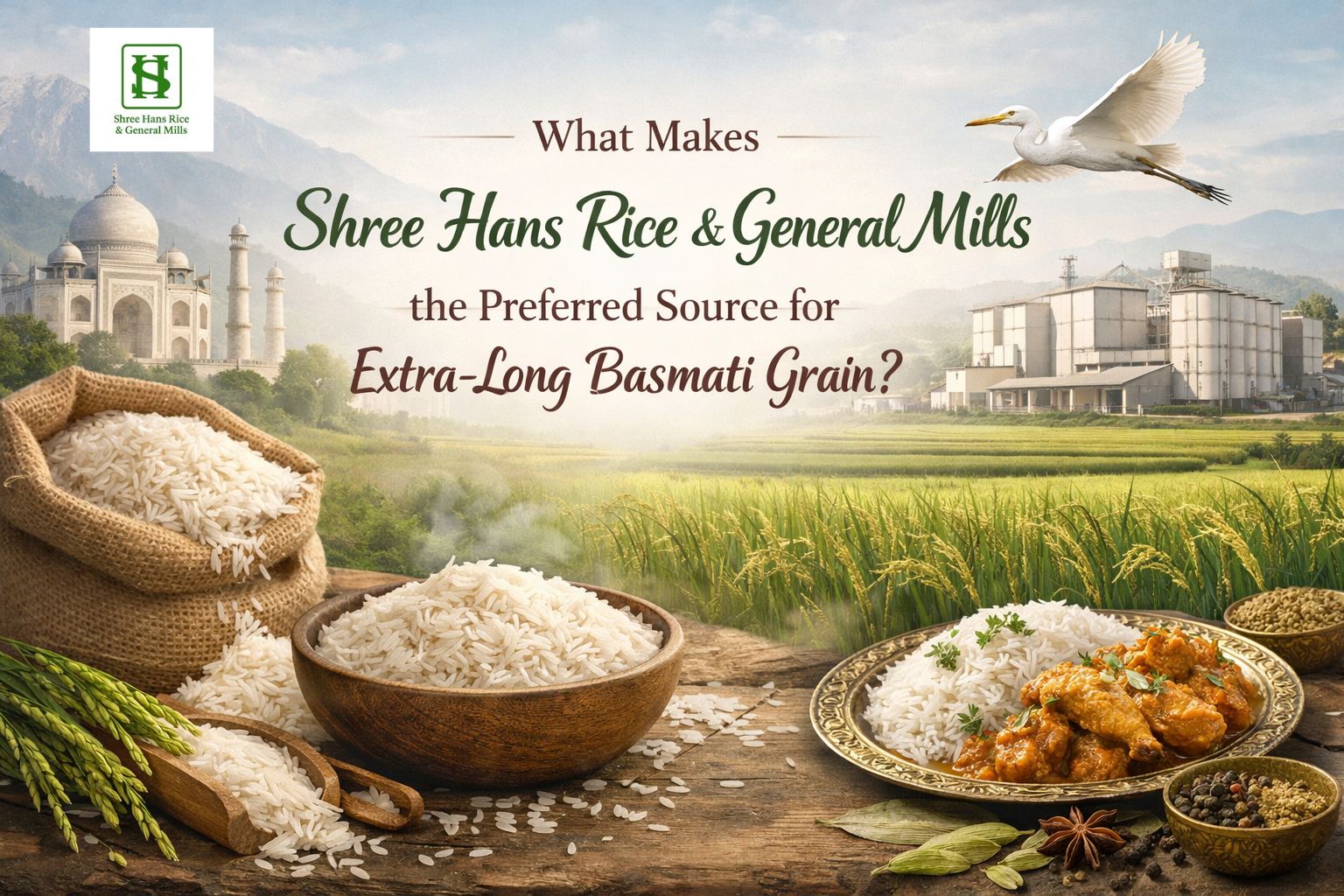
If you’ve ever handled basmati shipments, you know the moment of truth comes after cooking. The lid lifts, the steam rises, and the grains either stand tall or quietly disappoint. Most buyers learn this the hard way.
That’s why seasoned importers don’t chase labels or loud claims. They look for mills that behave the same way year after year. After all, reputed mills understand grain, time, and patience. This is where Shree Hans Rice & General Mills tends to stand apart. Not because of slogans, but because of how they work.
Let’s discuss in this blog why Shree Hans Rice & General Mills has become the top source for extra-long basmati grain.
Rice Holds Grain Length Where It Matters Most
Anyone can show long grains in raw form. That’s the easy part. What separates serious suppliers is what happens after cooking. Real-world use shows Shree Hans basmati elongates without breaking and stays separate on the plate. That usually points to two things done right:
1. Harvest selection
2. Ageing control
Extra-long grain basmati needs time to settle. Rush it, and the grain weakens. Shree Hans allows proper ageing before milling, which helps the rice stretch instead of splitting. You can notice this during routine cooking tests, not during sampling photos.
Milling Protects the Grain Instead of Forcing Shine
Shiny rice sells once. Good rice sells again. Testing across mills shows aggressive polishing damages extra-long grains. The common issue is that tips break and texture suffers. Thanks to Shree Hans, who follows a controlled milling process focusing on strength, not gloss. They make sure cleaning happens in stages and polishing stays light.
This approach aligns with grain-handling guidance shared by global food bodies like the FAO, which notes higher breakage when pressure and polishing increase beyond safe limits. The result is that the rice feels natural, not overworked.
Quality Stays the Same Across Repeat Orders
Poor-grade exporters fail because their first shipment looks great, the second is slightly different, and the third raises questions. In contrast, Shree Hans avoids that pattern.
- Their grain specs remain the same and fixed.
- Make sure moisture stays controlled.
- Sorting standards don’t shift based on price pressure.
So, you’ll usually notice that a shipment cooks exactly the same today as it does months later. That consistency is one of the quiet reasons Shree Hans is trusted as a long-grain rice exporter.
Export Readiness Shows After the Rice Leaves the Port
Exporting rice isn’t just about loading containers. It’s about how the rice behaves after weeks at sea. Shree Hans prepares basmati for long transit.
- Moisture levels are kept stable.
- Packaging holds under stacking pressure.
- Grain integrity survives handling.
These details matter when shipments land in the Middle East or other warm regions.
Note that moisture stability and packaging quality play a major role in post-arrival acceptance. Buyers working with Shree Hans report fewer inspection issues and smoother clearances. That’s the difference between exporting rice and being a dependable Long Grain Rice Exporter.
Private Label Supply Doesn’t Dilute the Grain
Private labelling is where many brands quietly fail. The bag looks right. The rice slowly changes. But the good thing is that Shree Hans keeps grain quality constant across private labels. Their rice stays the same in all packaging. That discipline protects overseas brands from slow erosion caused by silent spec changes. Experts at Shree Hans Rice & General Mills know that private label success depends more on grain control than artwork.
Approach Reduces Buyer Risk Over Time
Buyers don’t look for perfection. They look for fewer problems. Shree Hans reduces common pain points: variation, breakage, inconsistent aroma, and shipment surprises. Over time, that reliability matters more than aggressive pricing or loud claims. Professionals sourcing extra-long grain basmati usually value peace of mind. That’s what keeps Shree Hans on preferred supplier lists.
Conclusion
Choosing a basmati source isn’t about finding the longest grain on day one. It’s about finding rice that behaves the same way every single time you cook it. Explore the basmati range at Shree Hans Basmati and judge it the way experienced buyers do after cooking, not before.
Frequently Asked Questions
Because longer grains break more easily if ageing or milling is rushed.
Yes. Shree Hans age basmati rice before milling. Why? Because controlled ageing helps improve elongation and cooking strength.
Yes. Their setup supports repeat bulk shipments with stable quality.
Yes. Branding and packaging can be customised without changing grain specs.
Consistent grain specs, export-ready processing, and repeatable results.